 Hidden Gems
 Greece · On our TikTok
- The monasteries
- Perfect day
- Map & getting there
- Where to stay
- When to go
- Mistakes to avoid
- Quick answers
Nowhere else on Earth looks like this
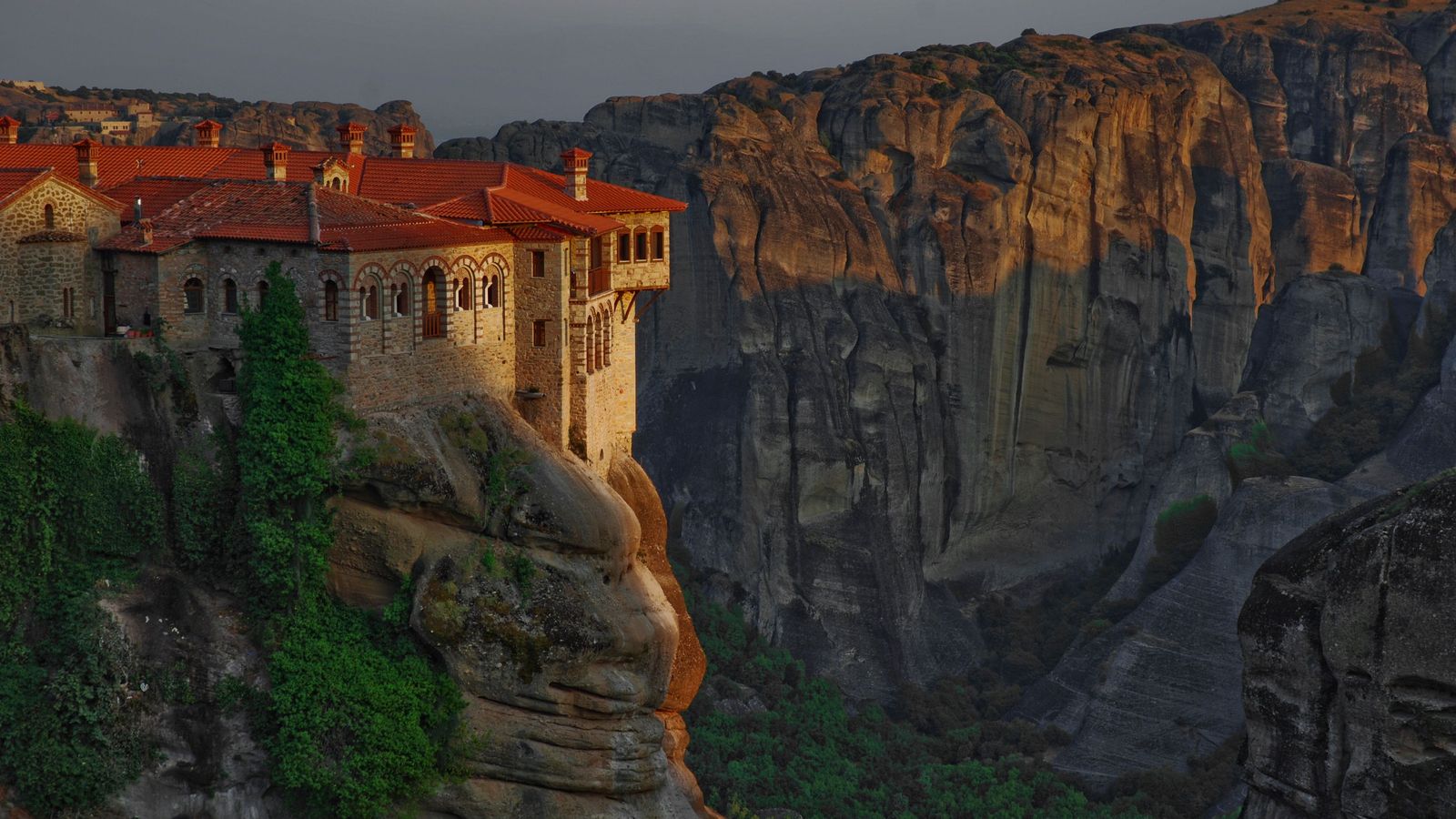
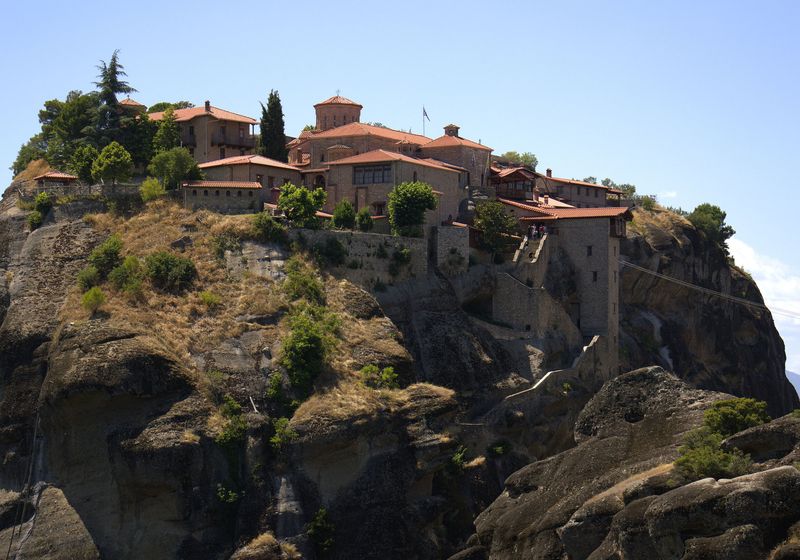
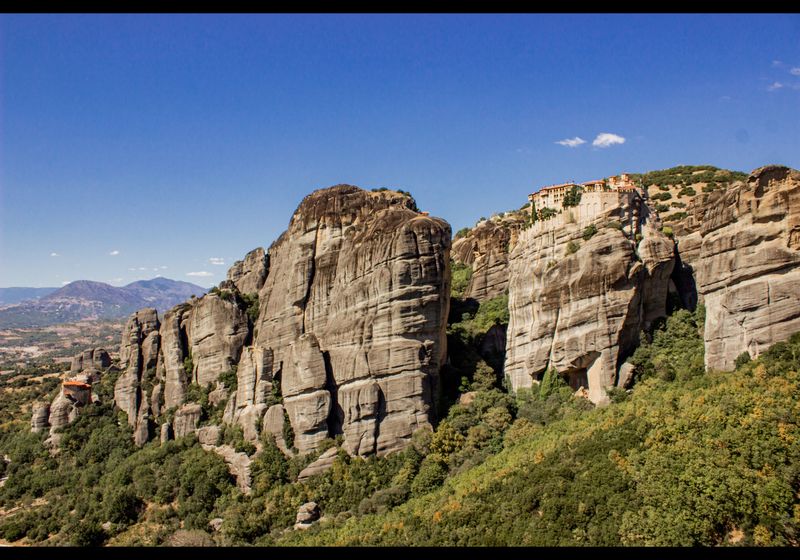
Picture giant stone towers shooting straight up out of a flat green plain. Now put a monastery on top of them. That's Meteora, which literally means "suspended in the air".
Monks started building up here in the 14th century to stay out of reach. For hundreds of years the only way up was a rope ladder, or a net hauled up by a winch. Yes, really. The stairs you'll climb today were only cut into the rock in the 20th century.
Six monasteries are still active, and you can visit all of them. The whole area has been a UNESCO World Heritage Site since 1988. Fair warning: it looks even better in person, especially when the morning mist rolls in between the pillars.
Pick your monasteries
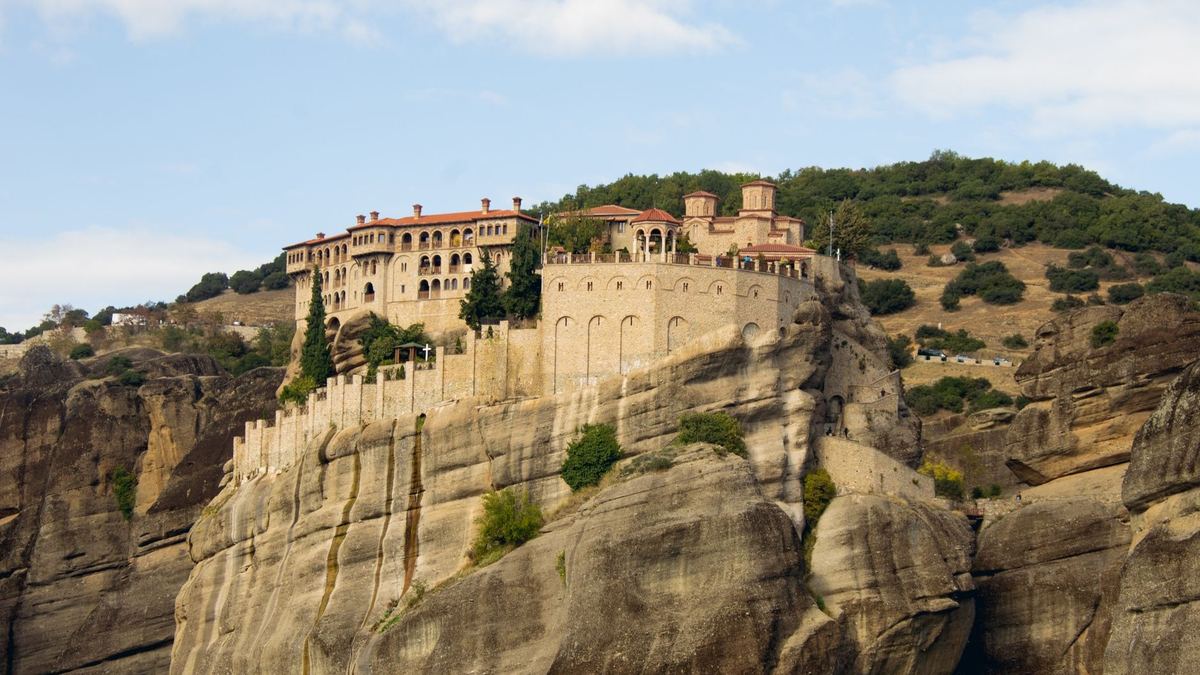
- Great Meteoron: the big one. Highest, oldest, with a museum inside. Only have time for one? This is it.
- Varlaam: right next door. Look for the old winch the monks used to haul up supplies, and each other.
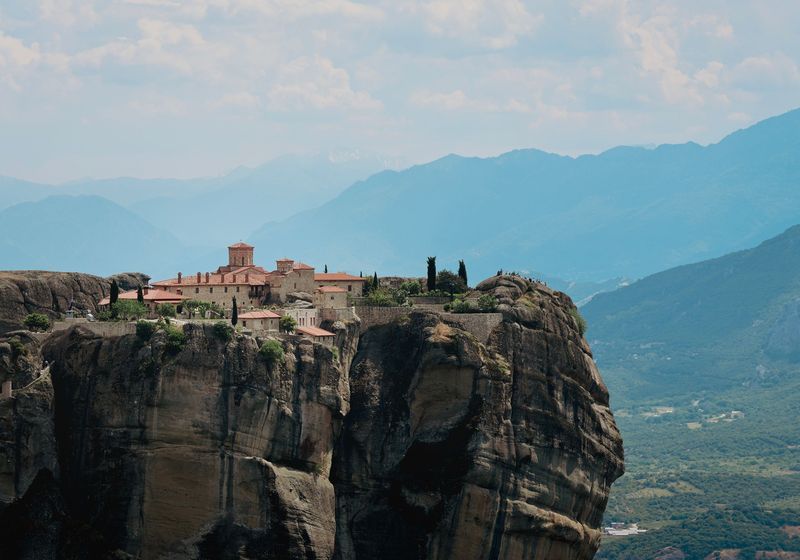
- Holy Trinity: alone on its own pillar, with the wildest views. Bring your legs, it's a steep climb.
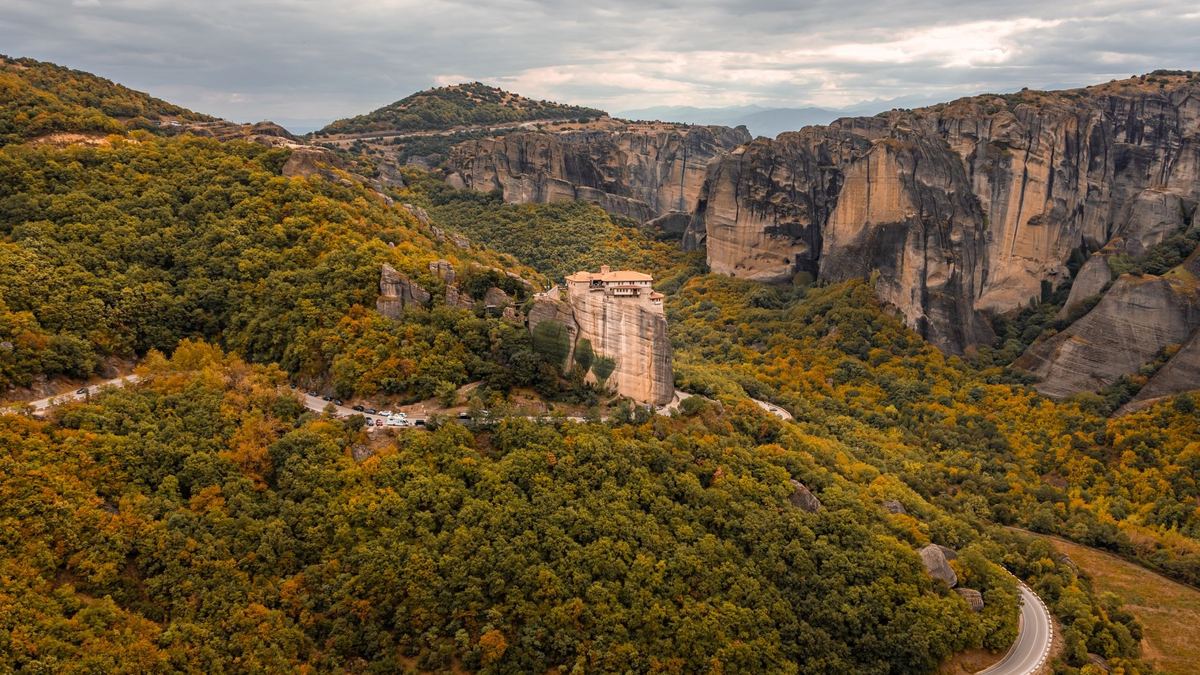
- Roussanou: a nunnery squeezed onto a narrow rock and reached by bridges. Very photogenic.
- St. Stephen: no stairs at all. Perfect when your knees have had enough.
- St. Nicholas Anapafsas: small, with stunning frescoes. The first one you pass walking up from Kastraki.
Don't try to do all six. Two or three is the sweet spot: Great Meteoron for the history, Varlaam or Roussanou for the views, St. Stephen for an easy one. Entry is €5 each, so bring cash.
The perfect day in Meteora
One full day covers the highlights. Stay two nights and you get a sunrise and a sunset without rushing, and that's when Meteora is at its best.
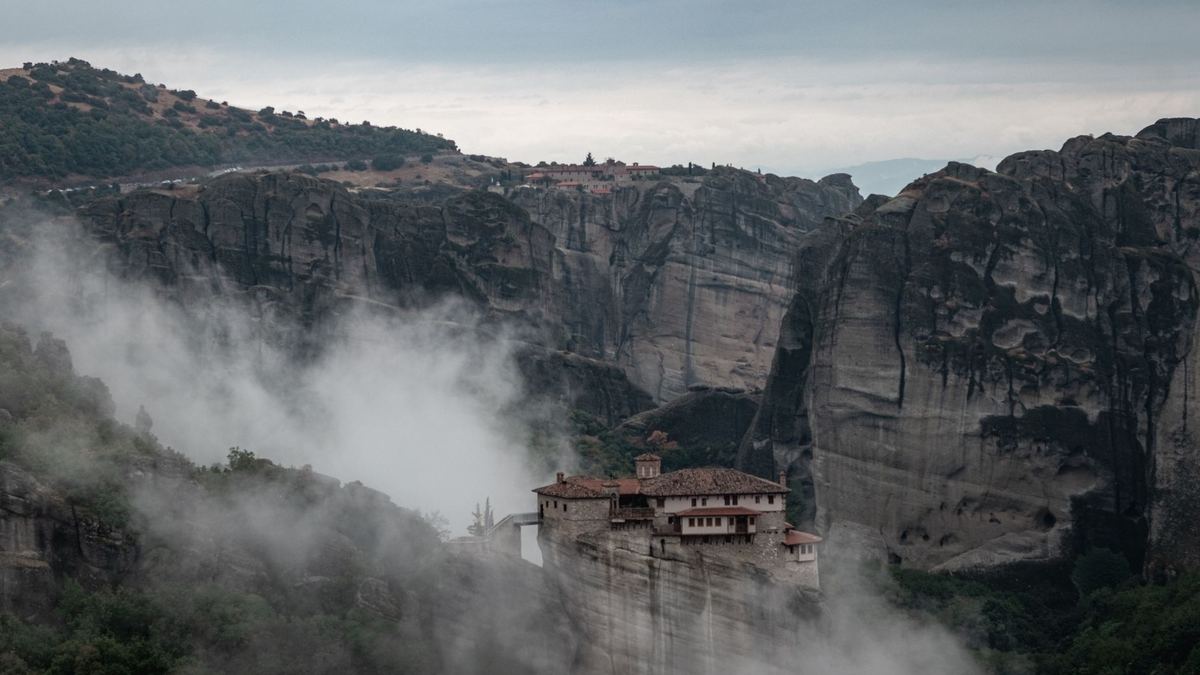
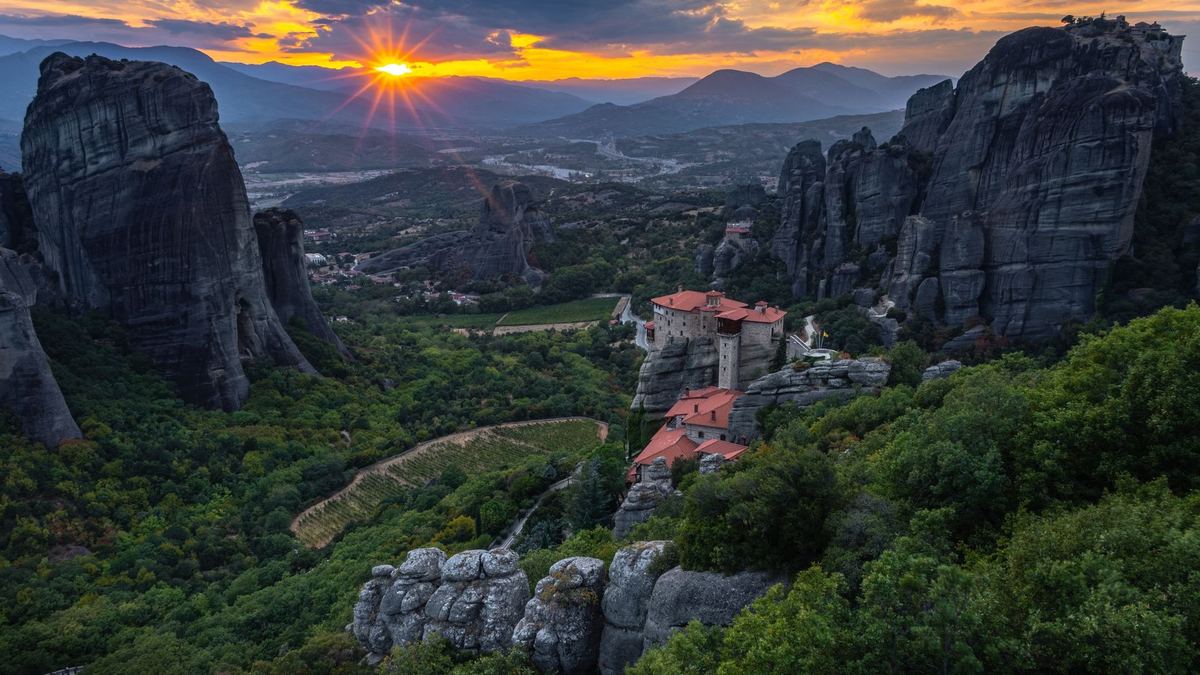
- SunriseHead to a viewpoint above Kastraki and watch the mist lift off the rocks. Just you and a few early birds.
- Opening timeGreat Meteoron first, then a short walk to Varlaam. Beat the crowds by an hour and it feels like a different place.
- MiddayThe tour coaches arrive. You leave. Long Greek lunch down in Kastraki or Kalambaka.
- AfternoonRoussanou and St. Stephen, or hike one of the old monk paths between the rocks.
- SunsetGrab a rock ledge near Holy Trinity and watch the monasteries turn gold.
Where it is and how to get there
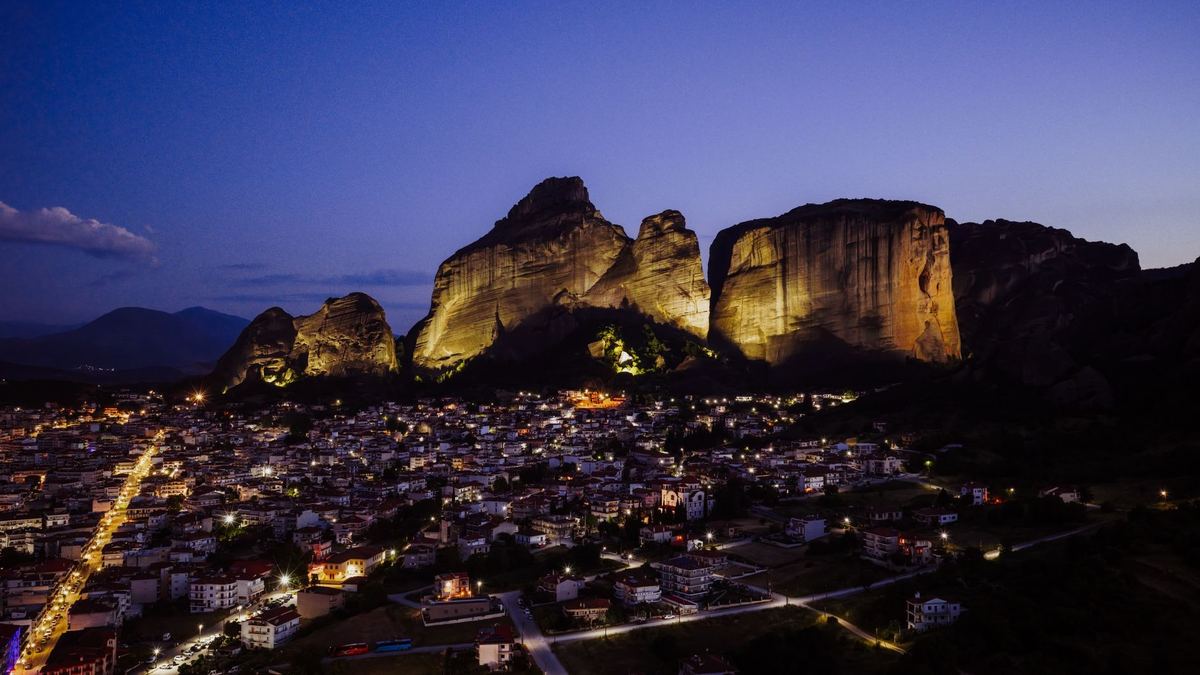
Meteora rises right behind the town of Kalambaka, in central Greece.
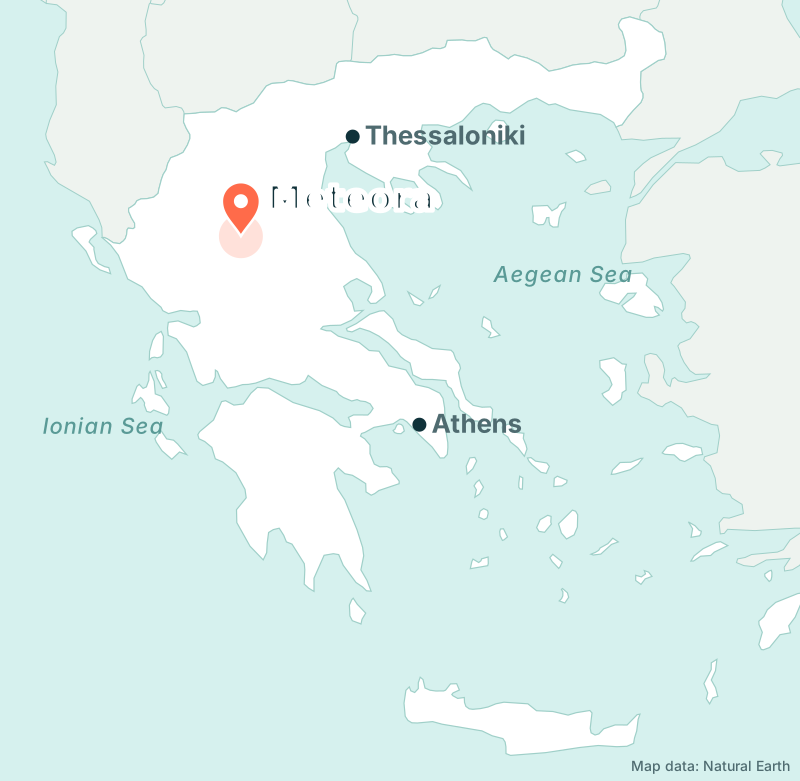
- By car About 4–5 hours from Athens, around 3 from Thessaloniki. The easiest option, and handy once you're up top.
- By bus KTEL buses run from Athens, usually with a change in Trikala.
- By train Kalambaka's pretty little station hasn't seen trains since the 2023 storm damage. For now, trains from Athens go as far as Paleofarsalos, and a connecting bus covers the last stretch (about 1 hour 45 minutes). Full service is planned to return, so check the latest before you book.
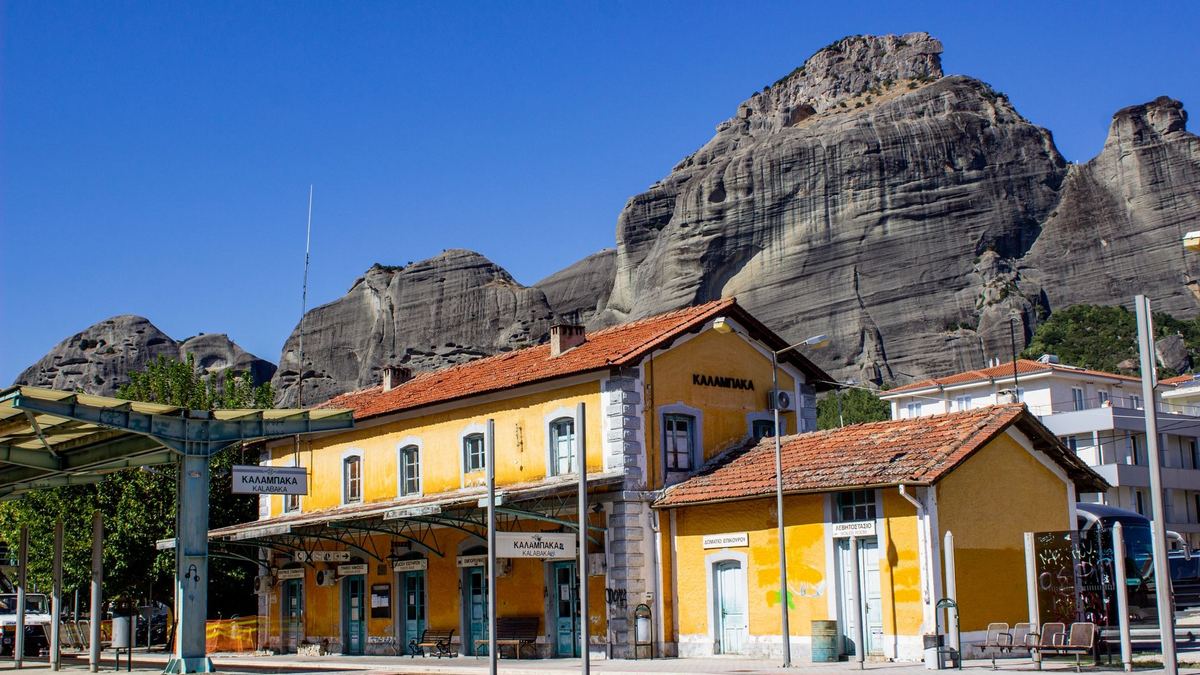
Getting around up top: one road loops past all six monasteries. The car parks are tiny and fill up by late morning, so come early. No car? Taxis wait in Kalambaka, a local bus runs up in season, or just walk. The old paths from Kastraki reach the nearest monasteries in under an hour.
Where to stay: Kalambaka or Kastraki?
Kalambaka
The proper town. More hotels, more tavernas, and the bus station. Easy if you don't have a car.
Best for: first-timers and bus travellersKastraki
A tiny village right under the rocks, minutes from the trails. Quieter nights, and lots of rooms look straight at the pillars.
Best for: hikers, photographers and couplesWhen to go
- Spring April to June. Green valleys, wildflowers, perfect hiking weather.
- Summer July and August. Hot and busy. Go early and rest at midday.
- Autumn September and October. Golden colours, mild days, fewer coaches. Our favourite.
- Winter Cold, sometimes snowy, with shorter opening hours. But those misty mornings? Almost all yours.
Our tips for Meteora
- Sleep there. Day-trippers miss sunrise and sunset, the two best moments. One night minimum, two is better.
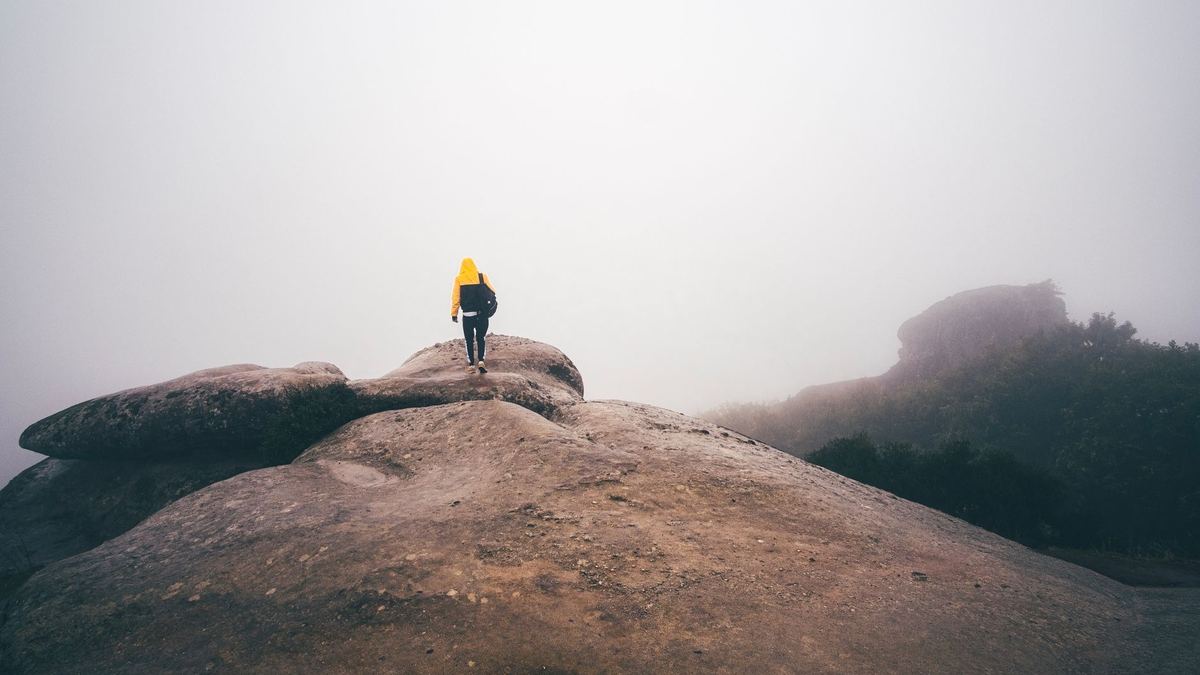
- Set an alarm for sunrise. At least once. The valley often fills with mist and the monasteries float above it.
- Walk the old monk paths. Quieter than the road, and you see the pillars towering over you.
- Dress for the monasteries. Shoulders covered, long trousers for men, a skirt for women. They usually lend wraps at the door, but bring your own to be safe.
- Check closing days. Each monastery closes on a different day, and winter hours are shorter. Plan your route around it.
Don't make these mistakes
- Showing up at 11am. That's when the coaches pull in. Go early or late.
- Trying to tick off all six. Too many stairs, too many queues. Three, done slowly, wins.
- Taking photos inside the churches. It's not allowed, and the monks and nuns will notice. Shoot the views instead.
- Underestimating the stairs. Some climbs are hundreds of steps in full sun. Water, hat, good shoes.
- Flying a drone without checking. Meteora is protected and the rules are strict. Check before you fly, and never fly over the monasteries.
Quick answers
Is Meteora worth the trip from Athens?
Absolutely, as long as you stay at least one night. A day trip means eight-plus hours on the road for a few hours at the busiest time of day.
Can I visit Meteora without a car?
Yes. Stay in Kalambaka or Kastraki, walk the old paths up to the monasteries, and grab a taxi or join a tour for the farther ones.
Which monastery has the fewest stairs?
St. Stephen. Cross a short bridge from the road and you're in.
How much does it cost?
€5 per monastery, cash. Prices and opening days can change, so double-check before you go.
A note on prices: fees, opening hours and timetables change, and we update them every year. The details in this guide were checked in autumn 2026 and may be different by the time you travel, so please confirm them on the official website before you book.